In special education, a concern raised but never documented can later become a conversation no one remembers the same way.
That is why I tell parents to build the paper trail before they need it.
Documentation is not about sending aggressive emails, copying everyone in the district, or turning every disagreement into a formal dispute. It is about maintaining an accurate, organized record of what was requested, what the school proposed or refused, what services were supposed to occur, what the data show, and what still requires follow-up.
When staff change, meetings run long, decisions are made verbally, or a student’s progress becomes disputed, the written record becomes one of the most reliable ways to reconstruct what happened.
What belongs in the paper trail
A useful special education record may include:
• Evaluations and assessment reports
• Current and previous IEPs or 504 Plans
• Meeting notices and agendas
• Prior Written Notices
• Procedural safeguards
• Progress reports and report cards
• Service logs and attendance records
• State and district assessment reports
• Work samples
• Parent concerns and written requests
• Emails with teachers, service providers, administrators, and the IEP team
• Notes from meetings and telephone calls
• Records of missed, shortened, or rescheduled services
• Documents showing what interventions were attempted and whether they worked
The purpose is not to collect paper for the sake of collecting it. The purpose is to create a usable timeline.
Follow important conversations in writing
Telephone calls and hallway conversations may be convenient, but important information should not live only in someone’s memory.
After a substantive conversation, send a short, factual follow-up email. You do not need to write a legal brief. State your understanding of what was discussed, identify any agreed next steps, and ask the recipient to correct anything you misunderstood.
For example:
“Thank you for speaking with me today. My understanding is that my child did not receive the scheduled speech-language service on October 8 and that the team is reviewing whether the session will be made up. Please let me know if I misunderstood any part of our conversation and confirm the next step.”
That message is clear, neutral, and useful. It identifies the concern without adding assumptions or unnecessary accusations.
Document facts before conclusions
Strong documentation separates what you know from what you believe may be happening.
Instead of writing, “The school never provides services,” identify the dates shown on the service log, the dates your child was absent, the dates the provider was unavailable, and the sessions that remain unexplained.
Instead of writing, “My child is not making progress,” identify the goal, baseline, progress reports, current data, and the length of time the same performance level has been reported.
Facts make it easier to ask focused questions:
• Was the service delivered as written?
• What data were collected?
• How was progress measured?
• What changed after the intervention was implemented?
• What will the team do if the current approach is not producing progress?
Document before, during, and after the meeting
Before the meeting: Send your concerns, requests, and questions in advance. Ask for the documents the team plans to review. Organize your records by topic instead of relying on one large email chain.
During the meeting: Take notes about proposals, refusals, data cited, unresolved questions, and agreed follow-up. If the discussion moves quickly, ask for clarification. Do not assume the final document will capture every important exchange.
After the meeting: Review the IEP, meeting notes, and Prior Written Notice. Compare them with your notes. If something material is incorrect or omitted, identify it promptly and request clarification or correction in writing.
Under IDEA, parents must have an opportunity to inspect and review education records related to identification, evaluation, educational placement, and the provision of a free appropriate public education. The federal regulations are available through the IDEA website.
Keep the record usable
A paper trail only helps if you can find what you need.
Create folders for evaluations, IEPs, 504 Plans, meeting notices, Prior Written Notices, progress data, service records, correspondence, and work samples. Name digital files with the date first so they remain in chronological order. Maintain a one-page timeline of major requests, meetings, evaluations, decisions, and follow-up dates.
Do not wait until the night before a meeting or complaint deadline to organize several years of records.
A paper trail cannot guarantee compliance. It can, however, make patterns visible, preserve the history, improve the quality of your questions, and prevent the record from being rewritten later.
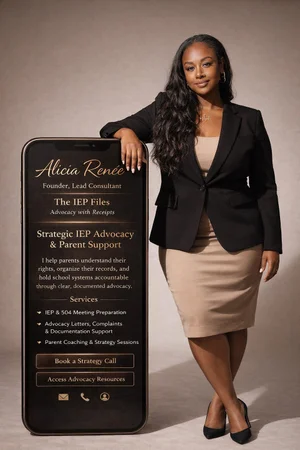
Next step: If you need help reviewing the record and identifying what the documents show, schedule a Strategy Intensive™. You can also explore The IEP Files™ resources for tools that support meeting preparation and documentation.
This article provides educational information and is not legal advice.