
Build the Paper Trail Before You Need It
Documentation is not about creating conflict. It is about preserving an accurate record of requests, decisions, services, progress, and concerns before memories change or disagreements arise.
The IEP Files Defines That™ | October 2026 Recap
Special education has its own language—and families are often expected to understand it while making high-stakes decisions about their child’s education.
That is why I created The IEP Files™ Defines That.
This series is not about memorizing special education vocabulary. It is about becoming fluent enough in the process to recognize what is missing, ask better questions, and make informed decisions before agreeing to a plan.
A term on an IEP is never just a term. It can determine what the school must consider, what it must document, what support a student receives, and what options a parent has when the process breaks down.
Every Wednesday on TikTok, I break down one special education term in plain language. At the end of each month, I will bring the four terms together here on the blog—because understanding each definition matters, but understanding how the terms work together is where families begin to build strategy.

FMLA Can Cover IEP Meetings: What the Department of Labor Said (And How Parents Can Use It)
If your job makes you “choose” between your paycheck and showing up for your child’s IEP meeting, that’s not just unfair—it may be illegal. The U.S. Department of Labor has clarified that parents can use intermittent FMLA leave to attend IEP meetings, as long as the child has a qualifying serious health condition. Here’s what that actually means, and how to use it.

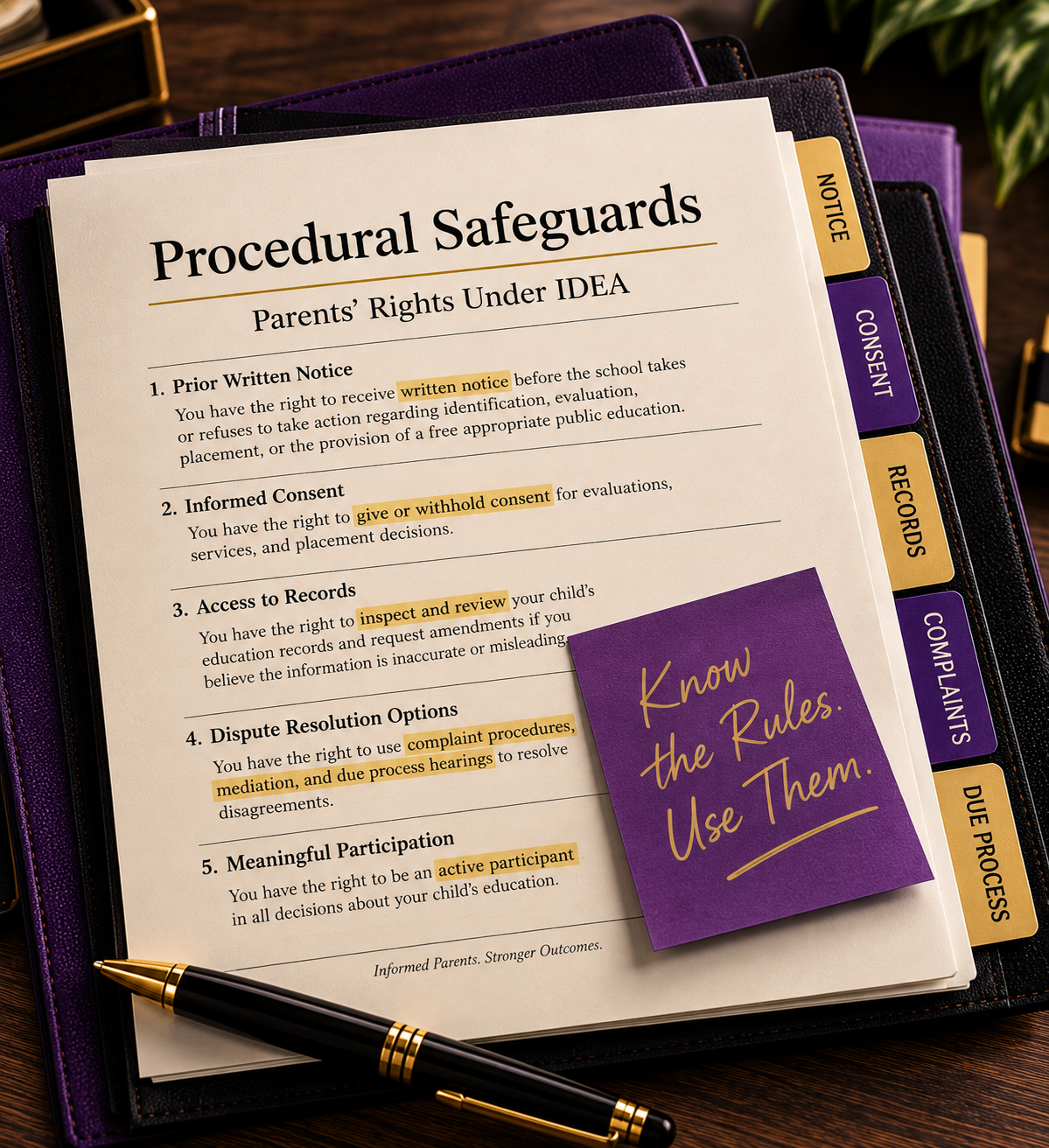
The IEP Files™ Defines That: Why the Words Matter
Special education has its own language—and families are often expected to understand it while making high-stakes decisions about their child’s education.
That is why I created The IEP Files™ Defines That.
This series is not about memorizing special education vocabulary. It is about becoming fluent enough in the process to recognize what is missing, ask better questions, and make informed decisions before agreeing to a plan.
A term on an IEP is never just a term. It can determine what the school must consider, what it must document, what support a student receives, and what options a parent has when the process breaks down.
Every Wednesday on TikTok, I break down one special education term in plain language. At the end of each month, I will bring the four terms together here on the blog—because understanding each definition matters, but understanding how the terms work together is where families begin to build strategy.
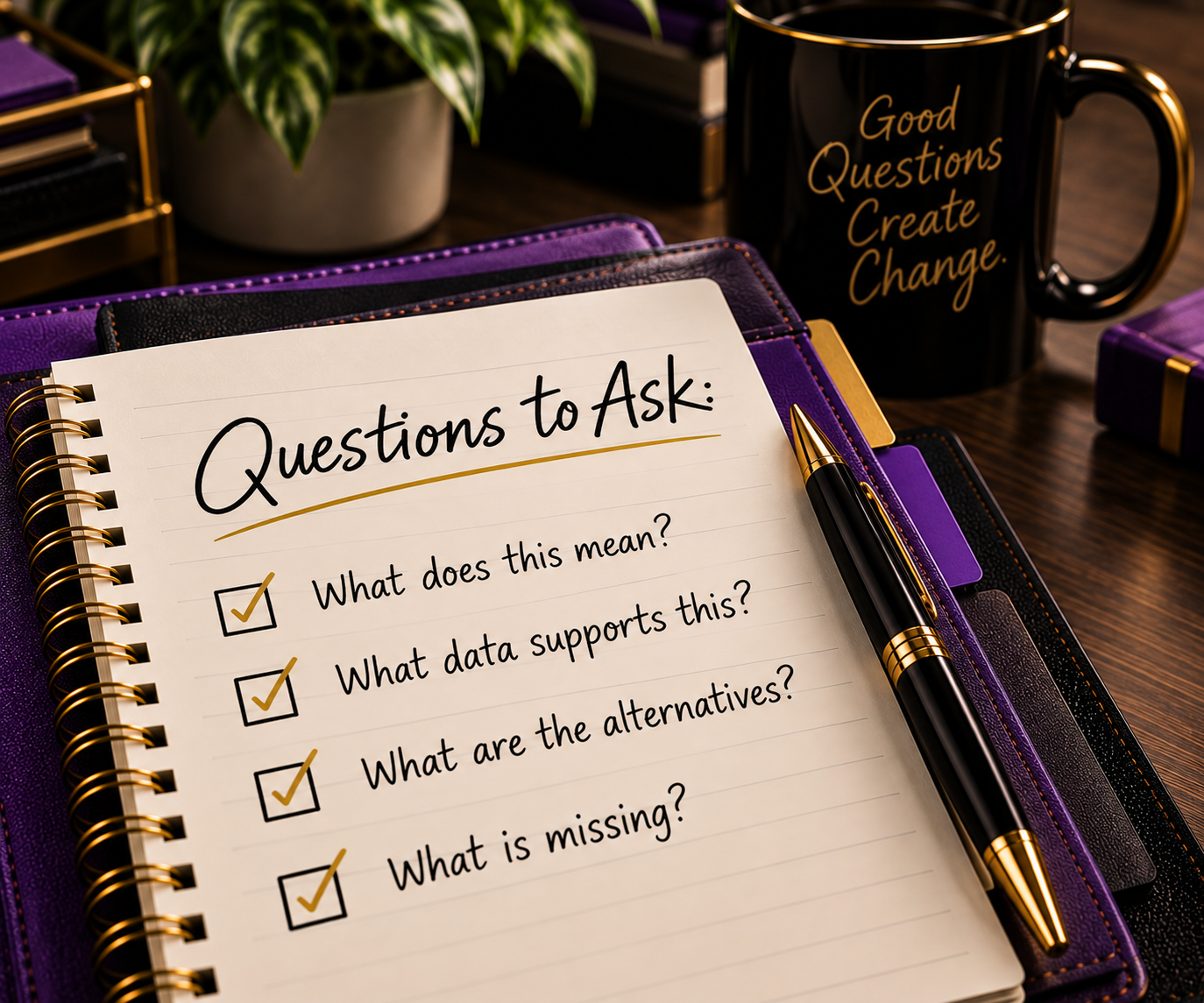

Building the Right Team Around Your Child: How ABA Providers, Schools, and IEP Teams Can Work Together
Your child may have a teacher, special educator, BCBA, RBT, speech-language pathologist, occupational therapist, and other professionals supporting them. But having multiple professionals is not the same thing as having a coordinated team.


IEP Consent, Partial Consent, and What Not Signing Really Means
Most families are juggling work, appointments, school emails, therapies, other children, and the emotional weight of advocacy. So when a school hands you an IEP and asks you to sign, it is easy to feel pressured or unsure. This quick guide breaks down IEP consent, partial consent, and what not signing may actually mean, so parents can make informed decisions, protect services, request Prior Written Notice, and advocate with receipts before they sign.

Special Education Laws—and the Laws That Protect Your Child Beyond the IEP
An IEP is only one layer of protection. Families are often taught to focus on IDEA alone, but multiple federal laws safeguard students with disabilities—inside and outside the classroom. This piece explains the broader legal framework parents need to know to advocate effectively.

Federal Circuit Courts: What Parents Need to Know (and Why Schools Don’t Explain This)
Your special education rights don’t just depend on federal law—they depend on where you live. Federal circuit courts interpret IDEA and Section 504 differently, and schools rarely explain how this affects parents. This piece breaks down what federal circuits are, which one governs your state, and why it matters when disputes arise.

Leveraging AI for Parents: How to Use It Wisely Without Replacing an Advocate or Attorney
Artificial intelligence can be a powerful support tool for parents navigating special education—but only when used appropriately. This guide explains how AI can help with organization, documentation, and preparation, while clarifying why it should never replace a trained advocate or attorney when legal rights, strategy, and accountability are on the line.

Why DMV Parents Must Attend the COPAA Conference
DMV parents don’t need more opinions — they need clarity. The COPAA Conference equips families with the legal insight, documentation strategy, and advocacy tools necessary to navigate IEPs and 504 plans effectively.

Why You Must Document Disability-Related Absences and Tardies
Disability-related absences and tardies are not attendance problems — they are access issues. When schools fail to properly document these patterns, families are often blamed, services are delayed, and legal protections quietly erode.
This post explains why consistent documentation matters, how it connects to IEP and 504 protections, and what families must do to protect themselves when attendance is impacted by disability, medical needs, or school-based failures.

School Avoidance Is Not Truancy: What Parents and Schools Get Wrong
School avoidance is rarely resolved with one email or one meeting.
For IEP and 504 families, it requires ongoing documentation, strategy, and informed advocacy.
The IEP Files Academy is an educational program designed to help parents understand their rights, organize documentation, and advocate effectively within the special education system.

Key IDEA Laws and Landmark Cases Every Parent Must Know (Maryland & Georgia Edition)
Special education rights are not based on opinions or school discretion—they are grounded in federal law and reinforced by decades of court decisions. This guide highlights the most important IDEA provisions and landmark cases every parent in Maryland and Georgia should understand to advocate effectively, recognize violations, and hold school systems accountable.

Why the COPAA Conference Matters — and How the Beth Goodman Scholarship Can Get You There
Advocacy is stronger when parents understand the law, the system, and how to use both strategically. The COPAA Beth Goodman Scholarship helps advocates attend the COPAA Conference — a rare space where parents, advocates, and attorneys learn together. With the conference being local this year, access matters more than ever. Applications are due January 16, 2026.

What the Spoon Theory Teaches SPED Moms (and Our Kids) About Energy
Spoon Theory gives language to something SPED moms live every day: energy is finite. Understanding this framework helps parents model boundaries, make intentional choices, and teach children that honoring their limits is not a weakness—it’s a skill essential to lifelong self-advocacy.

Parent Power: My Amazon Book + Tool List for Advocacy, Boundaries & Support
Parenting a child with an IEP, dyslexia, or autism isn’t easy—especially when schools throw jargon and red tape your way. Over the years, I’ve built an “advocacy shelf” of books and tools that keep me prepared for meetings, help me support my child’s learning, and remind me to protect my own peace.
This Amazon list is packed with my must-have resources: Wrightslaw guides for IEP law, Orton-Gillingham workbooks for reading, autism SEL activities, and even boundary + healing guides for parents. These are the receipts that changed the game for me—and they can do the same for you.